- WordPress: The traditional CMS giant
- What is a headless CMS?
- ButterCMS vs WordPress: Feature-by-feature comparison
- When to choose ButterCMS over WordPress
- Final verdict: Modern business needs modern solutions
WordPress is still the undisputed market leader in the CMS industry, but its growth has stalled in recent years. According to W3Tech trend data, WordPress adoption grew significantly from 21% of all websites in 2014 to 43.2% in 2022. Since then, however, its share has barely moved. As of October 2025, it stands at 43.2%.
There are several reasons for this slowdown, but one of the biggest is the rise of modern, flexible alternatives like headless CMS platforms. This is why you see more and more teams comparing headless CMS vs WordPress when formulating (or improving) their content management strategy.
In this guide, we will compare WordPress with ButterCMS, an award-winning headless CMS designed for fast-moving businesses who want performance and scalability without the overhead of a legacy, monolithic platform.
Table of contents
WordPress: The traditional CMS giant
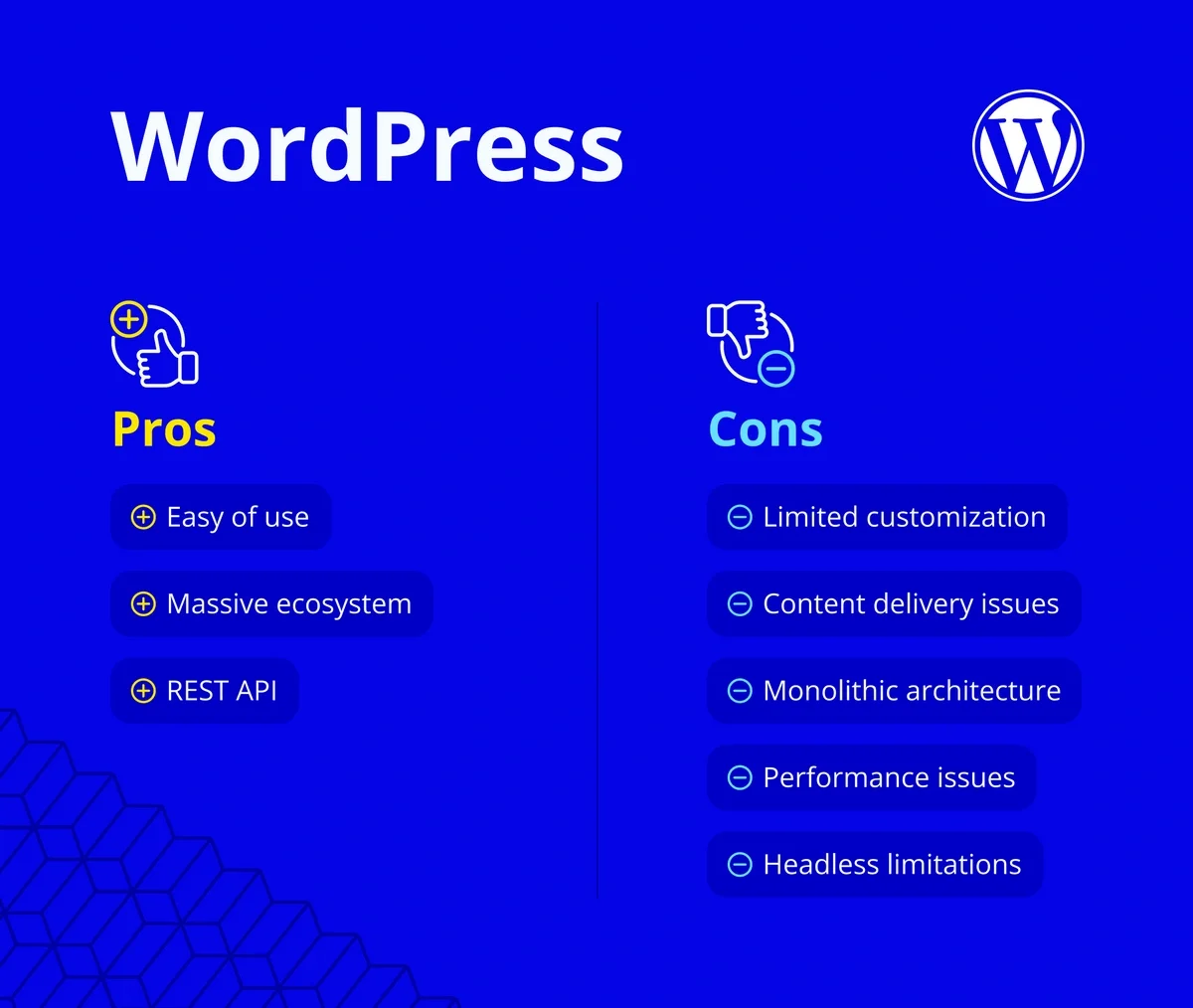
WordPress has all the features and plugins to get you started with a relatively simple blog, website, or even an online store (using WooCommerce). Its ease of use and massive ecosystem are why it continues to dominate.
However, at the end of the day, it’s still a monolithic, traditional CMS, which means you can’t:
-
Fully customize the frontend experience beyond what themes and plugins allow
-
Easily deliver content across multiple digital touchpoints
-
Separate the content layer from the presentation layer in a clean, scalable way
-
Keep performance predictable at enterprise scale without heavy optimization and complex hosting setups
While WordPress does provide a REST API, and you can even enable a GraphQL API with the WPGraphQL plugin, the inherent architectural limitations prevent you from setting up a reliable headless setup:
-
Most plugins are designed to work with WordPress’s default theme system and often break or become irrelevant in a headless setup
-
The admin panel is tightly coupled with the frontend, so it becomes harder to decouple content and presentation cleanly
-
Plugin and theme bloat can slow down performance and introduce security vulnerabilities
-
Content modeling is limited compared to modern headless CMSs, which makes it harder to achieve omnichannel consistency
What is a headless CMS?
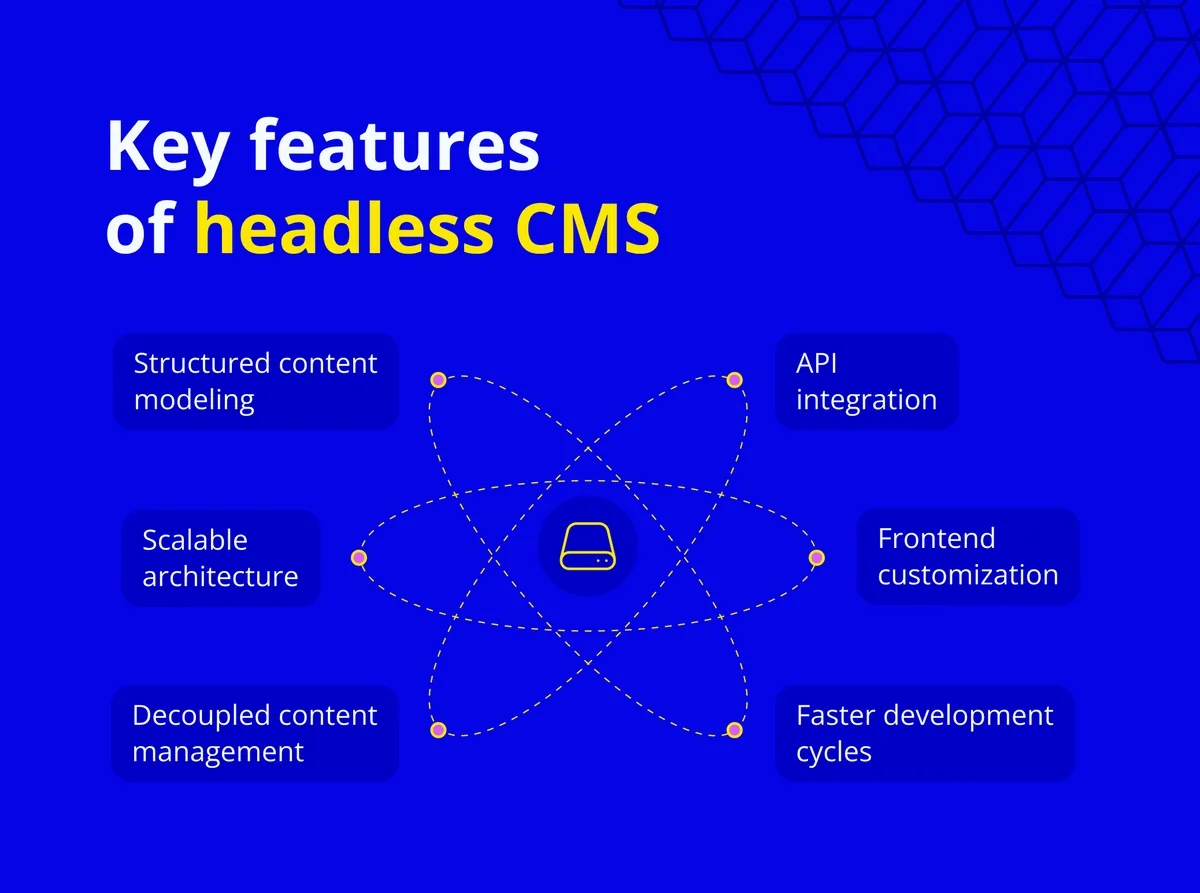
A headless CMS is a backend-only content management system. Through APIs, it can serve content to any number of frontends at the same time, whether that’s websites, mobile apps, smart devices, or even in-app widgets.
These are the main characteristics that set a headless CMS apart from traditional CMSs like WordPress:
-
APIs allow you to build seamless and consistent omnichannel experiences
-
APIs also allow you to integrate with virtually any third-party stack in a standard way
-
Full customization of the frontend using the technologies your developers prefer
-
Faster development cycles because developers work with modern frameworks rather than customizing themes and plugins
-
Marketers and content teams are decoupled from the development cycle, so they can publish without waiting on engineering changes
-
Scalable architecture that handles traffic spikes without the plugin bloat or theme dependencies of traditional CMSs
-
Structured content modeling lets you design reusable data types that work across multiple delivery channels
ButterCMS vs WordPress: Feature-by-feature comparison
In the table below, we compare ButterCMS and WordPress across all the categories that matter when choosing a CMS:
When to choose ButterCMS over WordPress
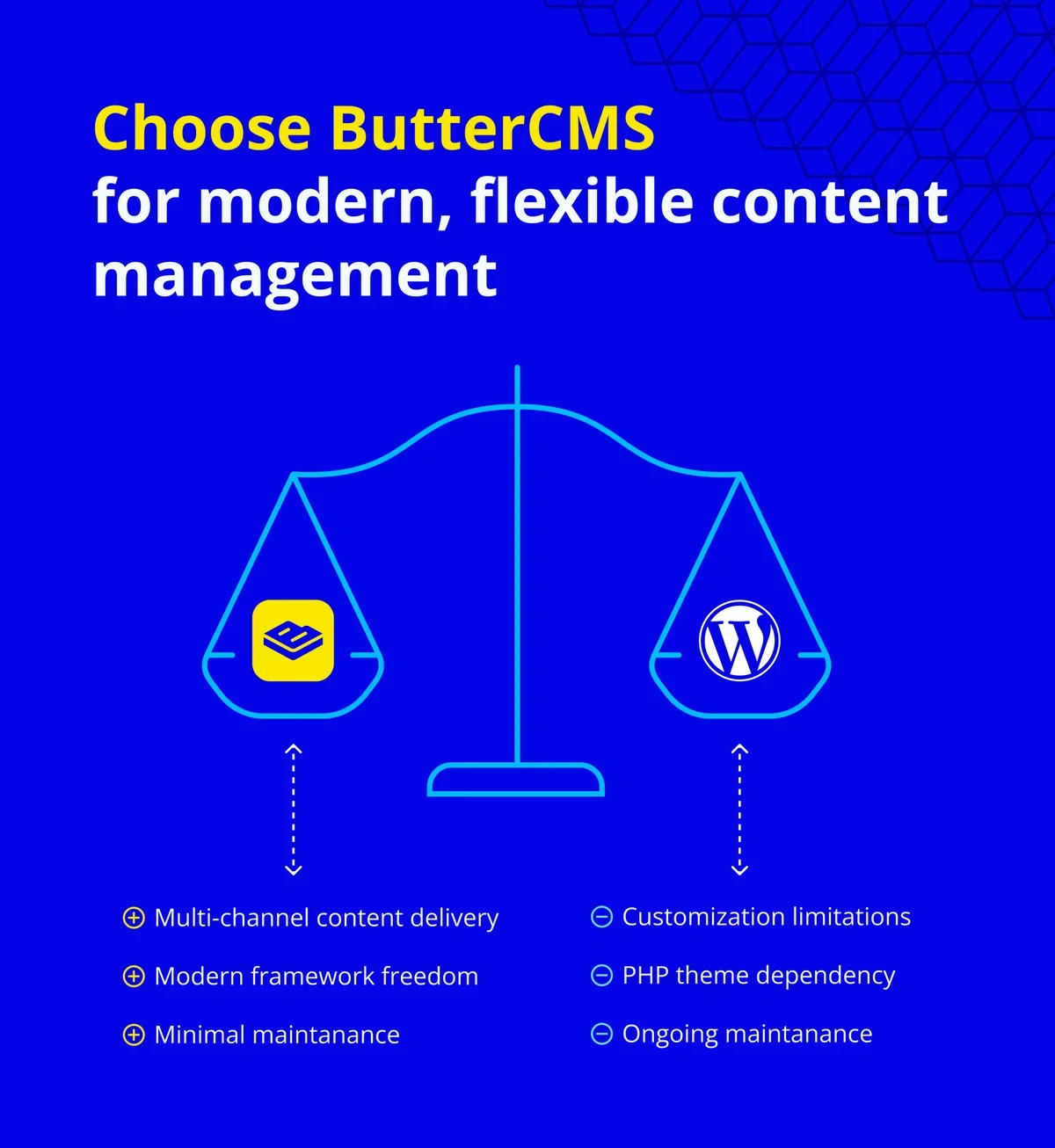
It wouldn’t be fair to say that ButterCMS can replace WordPress in every scenario, but there are clear situations where a headless approach provides more value. You should choose ButterCMS over WordPress if:
-
You need to publish content across multiple channels from a single backend
-
Your business requires faster time to market for modern digital products and doesn’t want to deal with the overhead of customizing WordPress for non-traditional use cases
-
You want to start with a usable free plan that supports unlimited users, locales, components, and collections
-
Your developers want the freedom to use modern frameworks, without being tied to PHP themes and plugins
-
You want structured content modeling to support reusable data and dynamic components
-
Your team wants to avoid ongoing plugin and theme maintenance and security patches.
Final verdict: Modern business needs modern solutions
Our headless CMS vs WordPress battle has turned out to be very one-sided. Outside of small personal sites or blogs, WordPress is easily outmatched by the flexibility and scalability of ButterCMS.
Ready to get started? Sign up for the free plan today and experience how easy it is to manage content, design experiences, scale across channels, and build with the technologies your team already loves.