Is your website helping, or holding you back?
Have you ever been ready to launch a campaign only to have to wait for your landing page to be built? Or struggled to launch in a new market because duplicating content across sites is difficult and time-consuming? If this sounds familiar, you’re not alone. Marketers everywhere are running into the same wall: websites that can’t keep up with the pace of modern business.
We wanted to understand just how common this problem is, so we asked more than 600 marketers about their websites, their CMSs, and the true costs of not being able to keep up with the business. The results were loud and clear: outdated platforms are slowing teams down, wasting time and money, and holding back growth.
But this is fixable. Our research not only reveals where marketers are getting stuck but also identifies the biggest opportunities to remove friction and move faster.
This post gives you a snapshot of what we found.
Want the full story? Download the report here: Built for Growth: The State of Website Agility for Marketers
Let’s dig in.
We surveyed 600+ full-time professionals across digital marketing, growth, ecommerce, content marketing, SEO, and martech. Our goal: get a clear picture of how teams manage their websites today, identify what slows them down, pinpoint where costs show up, and determine which tools actually help them do their job faster.
A few patterns emerged. 77% said their company's site needs improvement. More than a cosmetic update, marketers need their sites to perform better, scale easier, and respond faster. The majority (81%) rely on developers for basic updates, many waiting days for changes to go live. On the flip side, we saw a different story from marketers using modern, flexible platforms. They report more control, more confidence, and fewer bottlenecks.
This article shares just a snapshot. The full report digs into each theme in detail, including industry-specific insights and role-by-role comparisons, so you can benchmark your own team and spot the biggest opportunities.
Marketers want to move fast, test quickly, and iterate content to generate qualified leads and drive revenue. But many are held back by the basics:
Nearly 1 in 3 say their current architecture isn’t helping them work better or faster.
35% say their website actually blocks fast execution.
49% say their company website management tools take an excessive amount of time to make changes.
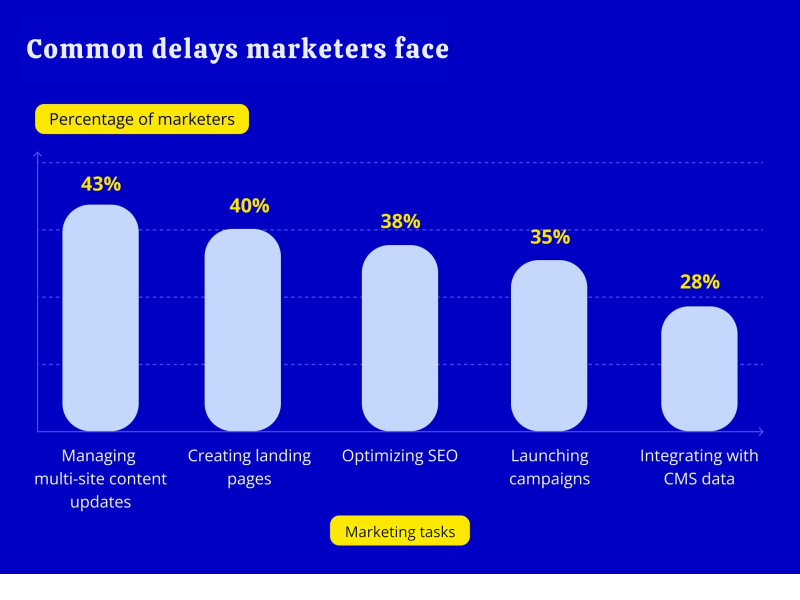
Why this matters: The effect of lost time isn’t neutral. Every delay pushes launches out and slows experimentation and learning. These slowdowns have a compounding effect that can ripple through the entire revenue engine. What looks like “just a few days lost” is actually competitive ground ceded to a faster competitor. One of the biggest culprits behind these delays? Developer dependence.
Most marketers told us they can’t make routine updates on their own. 81% rely on developers, and nearly half (45%) said changes take multiple days to complete.
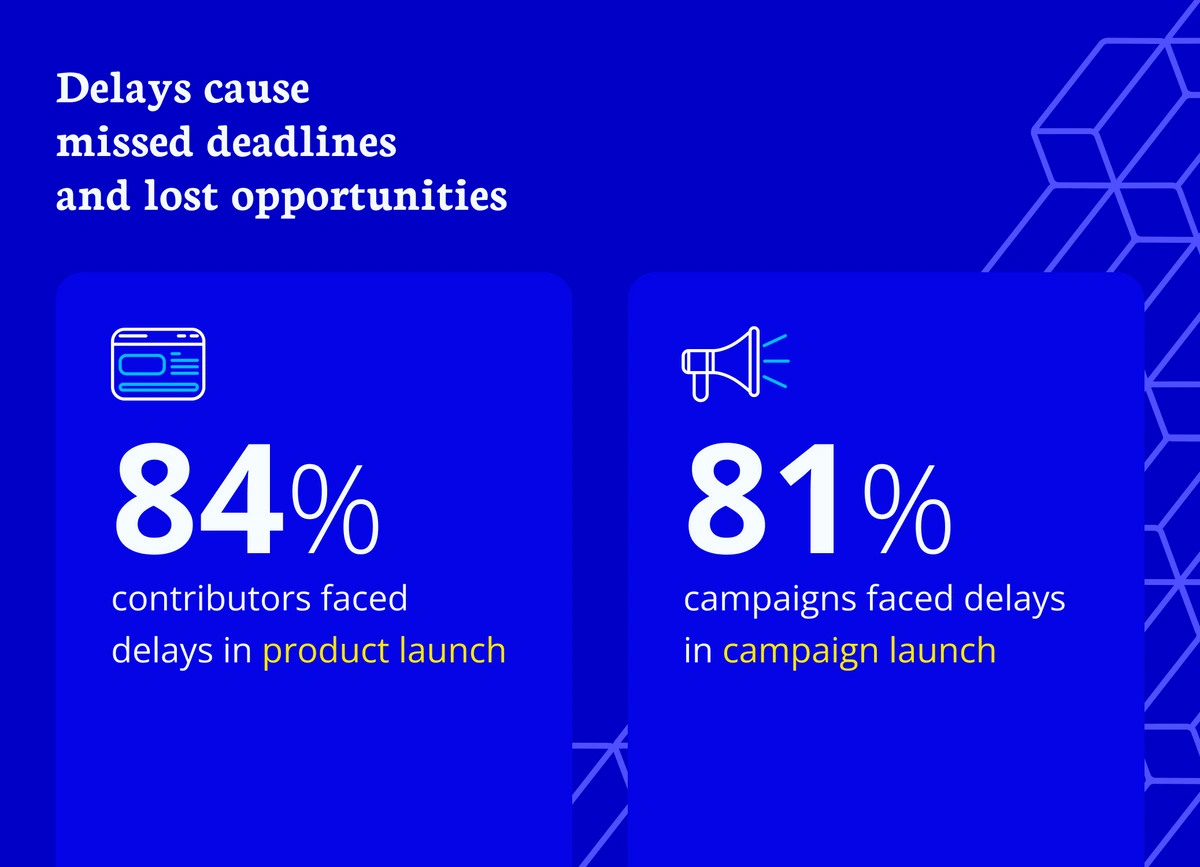
The ripple effect is huge: 70% report delays bringing products to market and 66% report slower campaign launches.
Why this matters: When developers spend hours fixing copy or duplicating pages, they aren’t building features that differentiate the business. And when marketers can’t move independently, growth slows across the board.
All of this builds to a breaking point. If everyday updates are this hard, it’s no wonder many marketers told us they’re weighing a full rebuild or replatform. But as we found, that path comes with its own risks.
Three out of four marketers told us they are considering a rebuild or replatform to ensure their website is meeting modern customer demands. If you aren’t familiar with those terms, a full rebuild means tearing everything down and starting fresh with new code and design. A replatform means migrating your site from your current system to a different one that promises more flexibility.
Neither is a small lift. Marketers in our survey estimated a rebuild on a new platform would cost more than $66,000. And without the right tool, even a pricey rebuild can leave you stuck with the same bottlenecks in a shinier package.
That’s why it’s critical to get clear on the jobs you need to get done and the tools that will solve for those specific problems. It’s also important to find tools that will scale with you as you grow.
That’s the crossroads many teams are standing at right now. Keep patching the old system? Take on a costly rebuild? Or choose a different path? Which one will actually remove the bottlenecks?
The full report digs into the decisions behind that choice, including:
Which day-to-day tasks drain the most time, and how the fastest teams avoid them.
Which roles and industries are hit hardest, so you can see how your team stacks up.
What’s driving rebuild and replatform decisions, and the overlooked risks that can cost more than they fix.
What high-performing teams are doing differently, and what you can borrow from them.
Your website should be a growth engine. The data in this report will show you what it really takes to make that possible for your business.
Download the full report: Built for Growth: The State of Website Agility for Marketers