Headless commerce is a modern way to build online shopping experiences. It solves many problems found in traditional ecommerce platforms and gives businesses more control and flexibility. But what is headless commerce, really? How does it work, and is it even the right fit for your use case? Let’s find out.
What is headless commerce?
Before we define headless commerce, it helps to understand what a headless architecture is in general.
In simple terms, a headless setup separates the front-facing part of an application from its backend. This means the presentation layer that users interact with works independently from the system that handles the logic, data, security, and processing behind the scenes.
Headless commerce follows the same pattern. It’s an ecommerce setup where the frontend and backend of your store are decoupled. The frontend focuses on design elements such as images, buttons, text, and fonts. The backend handles the core business functions (payments, orders, products, and security) without being tied to how the site looks or behaves.
This separation gives teams the freedom to build faster, more customized shopping experiences while keeping the backend stable and efficient.

How headless commerce works: A deeper dive
The frontend and backend of a headless commerce system may be decoupled, but they still need a way to communicate. This communication happens through APIs. APIs act as bridges that pass data between both layers. The use of APIs is beneficial because it allows teams to connect the headless commerce backend with multiple frontends simultaneously, like web stores, mobile apps, in-store kiosks, or even smart devices.
How the decoupled frontend works
-
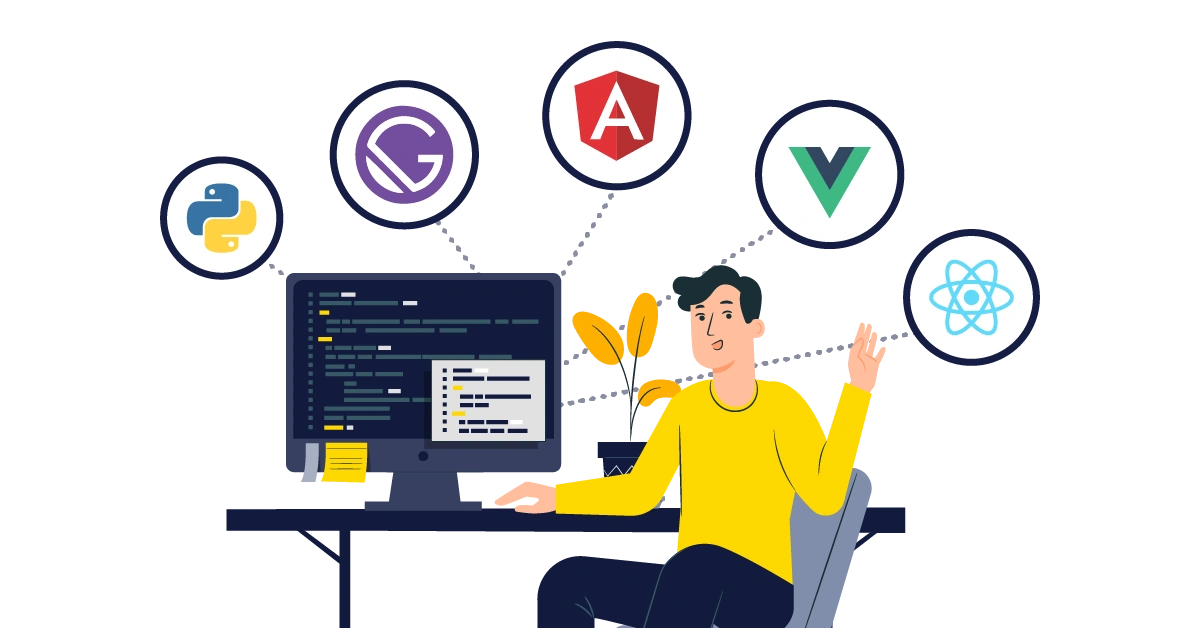
Developers can choose any frontend technology they prefer, such as React, Vue.js, Angular, or Flutter.
-
The frontend pulls data from the backend through API calls.
-
Designers have more creative freedom since they aren’t limited by backend templates or themes.
-
Content updates and UI changes can be made quickly without risking backend disruptions.
How the decoupled backend works
-
It focuses entirely on managing e-commerce logic like product data, pricing, orders, and customer accounts.
-
It exposes this data through APIs, which the frontend can then request and display as needed.
-
The backend can connect to multiple frontends at once.
-
Integrations with CMS, ERP, PIM, payment gateways, and other third-party software are handled at this layer.
Benefits of headless commerce
Here are some tangible benefits of adopting headless commerce:
-
It’s very easy to go omnichannel since the same backend can power all your digital touchpoints, while keeping everything in sync.
-
Developers get the freedom to use modern tools, and marketers can update content or launch promotions without waiting for technical support.
-
APIs make your ecosystem interoperable. You can easily connect tools like a headless CMS to manage blogs, product stories, promotions, or landing pages alongside your main store.
-
It scales smoothly because the frontend and backend can grow separately based on traffic or business needs.
-
It keeps your store future-ready, making it easy to add new sales channels or devices through simple API connections.
-
Going headless grants brands full creative control, allowing them to create the exact look and feel they envision without limitations.
-
Faster page load times from headless commerce can positively affect customer purchasing decisions, as 82% of consumers say slow speeds impact their choices.
Headless vs. traditional commerce
Here’s a table that summarizes the main differences between headless commerce and traditional commerce:
|
Aspect |
Headless commerce |
Traditional commerce |
|
Architecture |
Frontend and backend are decoupled |
Frontend and backend are tightly integrated |
|
Customizability |
High, as the frontend can be built with any technology |
Limited by platform templates and themes |
|
Developer / creative team decoupling |
Teams can work independently on frontend and backend |
Changes often require coordination between teams |
|
Speed |
Fast, as the frontend updates don’t affect backend |
Slower, as frontend changes may require backend adjustments |
|
Developer-friendliness |
High; full control over technology stack |
Moderate; limited to platform’s tools and structure |
|
Omnichannel Support |
Strong; same backend can serve multiple frontends |
Weak; usually tied to a single storefront |
|
Performance optimization |
Flexible; can optimize frontend and backend independently |
Limited; optimization depends on platform capabilities |
|
Best suited for |
Forward-thinking businesses that need scalability and omnichannel support |
Businesses that prefer an all-in-one solution with minimal technical complexity |
Is headless commerce right for you?
Headless commerce is powerful, but it’s not the right fit for every business. Choose it if you need any of the following:
-
A fully customized storefront that matches your brand identity.
-
Faster time-to-market for new features or design changes.
-
Omnichannel support, serving web, mobile, and other digital touchpoints from the same backend.
-
High scalability to handle traffic spikes or global expansion.
-
Fully independent workflows for developers and creative teams.
Headless readiness checklist
To implement a successful headless setup, you need:
-
A clear understanding of your business goals and digital strategy.
-
Skilled developers familiar with API-driven architectures.
-
A flexible backend platform that exposes data and services via APIs.
-
A frontend framework or technology that fits your design and performance requirements.
Headless vs. going hybrid
Some businesses may not need a fully headless approach and instead benefit from a hybrid setup. Hybrid commerce keeps parts of the frontend tied to the backend while allowing API-driven customization for specific areas.
This approach helps achieve a balance: you can get some of the flexibility and speed of headless while still using familiar templates and built-in platform tools. For companies unsure about fully decoupling, hybrid can be a stepping stone toward headless.
Conclusion
Headless commerce has so much in store for you. Whether you want to scale seamlessly, be more agile and futuristic, deliver a more engaging, truly omnichannel user experience, or enhance the productivity of your developers and marketers, headless commerce can enable you to do so. In this post, we shared a definitive guide to headless commerce. We hope you found it useful! If you're ready to explore the headless approach for yourself, ButterCMS makes it easy to manage your store's content and deliver it anywhere through a simple API. Start a free trial and see how it fits into your stack.
FAQs
What is headless commerce in simple terms?
Headless commerce is an e-commerce setup where the frontend (what customers see) is separate from the backend (where products and orders are managed).
How is headless commerce different from traditional commerce?
In traditional commerce, frontend and backend layers are tightly connected. Headless commerce decouples them, which allows teams to serve multiple channels from the same backend.
What are the pros and cons of headless commerce?
Pros include flexibility, faster updates, scalability, and omnichannel support; cons include higher technical complexity and the need for skilled developers.
Is headless commerce good for SEO?
Yes, headless commerce can be good for SEO if implemented correctly, since developers can optimize page speed, assets, metadata, and content structure independently of the backend.
Is Shopify headless commerce?
Shopify isn’t headless by default, but it supports headless setups. You can use Shopify’s backend for products and orders, while connecting it to a custom frontend through Shopify’s Storefront API.